As part of the LSEI Laboratory Scientific Days, you are cordially invited to attend a lecture by Professor Lotfi BAGHLI from the University of Nancy
02 November 2026; 09h30-10h30 at Cyber Espace
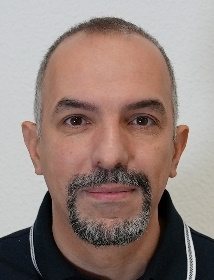
Lotfi BAGHLI (IEEE Senior Member 2012) was born in 1971. He received the Electrical Engineering Diploma degree (Hons.) in 1994 from the Ecole Nationale Polytechnique of Algiers, Algiers, Algeria. He received the DEA, PhD and HDR degrees in electrical engineering from the Université de Lorraine, Nancy, France, in 1995, 1999 and 2025 respectively. From 2000 to 2009, he was an Assistant Professor at Nancy University, Nancy. From 2009 to 2021, he was a Professor at Tlemcen University, Tlemcen, Algeria. Currently, he is an Assistant Professor at ENSEM, Nancy, and a member of Groupe de Recherche en Energie Electrique de Nancy. His research interests include digital control of electrical multi-phases PMSM and DSIM, metaheuristic algorithms applied to the control and identification of electrical machines, renewable energy and microgrids.
Title : Affordable Real-Time Power Electronics Control: Bridging the Gap Beyond High-End HIL/RCP Systems
Abstract:
This presentation addresses the implementation of Power Electronics converters and drives control on Digital Signal Controllers (DSC), specifically focusing on the challenges and solutions for achieving precise control in modern systems. We will detail the necessary sensors for accurate control, including current sensors, temperature sensors, and an Inertial Measurement Unit (IMU) for instantaneous torque measurement. The keynote will explain a modern, cost-efficient DSC architecture and highlight the essential on-board features required, such as PWM, ADC, Quadrature Encoder Peripherals (QEP), and various communication protocols (CAN, SPI, I2C, UART). We will demonstrate that the Texas Instruments F28379D LaunchPad is the optimal solution today for an affordable, industry-ready tool suitable for research and teaching in this field. While not a rival to high-end dSPACE MicroLabBox HIL/RCP solution, its programmability in C language allows for robust, self-driven expert control. The presentation will focus particularly on onboard peripheral configuration and the appropriate selection of interfaces for sensors and Power Electronics control (e.g., Fiber Optic Connection). The discussion will include examples of driving 4Q buck converters, BLDC control using the TI inverter DRV8305EVM and potential communication considerations.
As part of the LSEI Laboratory Scientific Days, you are cordially invited to attend a lecture by Professor Djelloul MOUSSAOUI from the USTHB
03 November 2026; 09h00-10h00 at Cyber Espace

Moussaoui Djelloul. received the Electrical Engineering Diploma degree from ENITA, Algiers, Algeria, in 1987. He received the Ph.D. degree in Electrical Engineering from INPG Grenoble, France, in 1997. From 2010 to 2024 he was a Professor at EMP, Algiers, Algeria. He is currently a Professor at USTHB, Algiers, Algeria. His research interests include the industrial characterization of soft magnetic materials, the implementation of magnetic behavior models for magnetic materials, and the design of electromagnetic devices.
Titre : Matériaux magnétiques pour le génie électrique : applications, valorisation et perspectives
Abstract : Les matériaux magnétiques occupent une place centrale dans les technologies de conversion et de gestion de l'énergie électrique. Ils constituent les composants essentiels pour une multitude d'applications stratégiques en rapport avec la sante, l’aéronautique, véhicules électriques, les énergies renouvelables, les capteurs, les alimentations etc .. L'essor rapide de l'électrification, le développement massif des énergies renouvelables et l'expansion de la mobilité électrique entraînent une hausse sans précédent de la demande en transformateurs, génératrices et machines électriques de fort rendement, stimulant ainsi le besoin en matériaux magnétiques tant classiques qu'innovants.
L’objectif de cette présentation est d'offrir une synthèse globale des différentes familles de matériaux magnétiques utilisés en génie électrique. Nous y abordons leurs propriétés physiques fondamentales, leurs procédés de mise en œuvre, leurs domaines d'application ainsi que leurs perspectives de développement. Enfin, une attention particulière est portée à l'enjeu stratégique que représente la valorisation des matières premières notamment le fer, le silicium, le cobalt et les terres rares, indispensable pour assurer la durabilité et la souveraineté de la chaîne de valeur industrielle.